In the future, all research and treatment activities related to various approaches to cell and gene therapy at LMU University Hospital will be consolidated at the “Munich Center for Cell and Gene Therapy” (MCCG). Clinics and collaborating organizations from various biomedical disciplines are involved.
LMU Klinikum
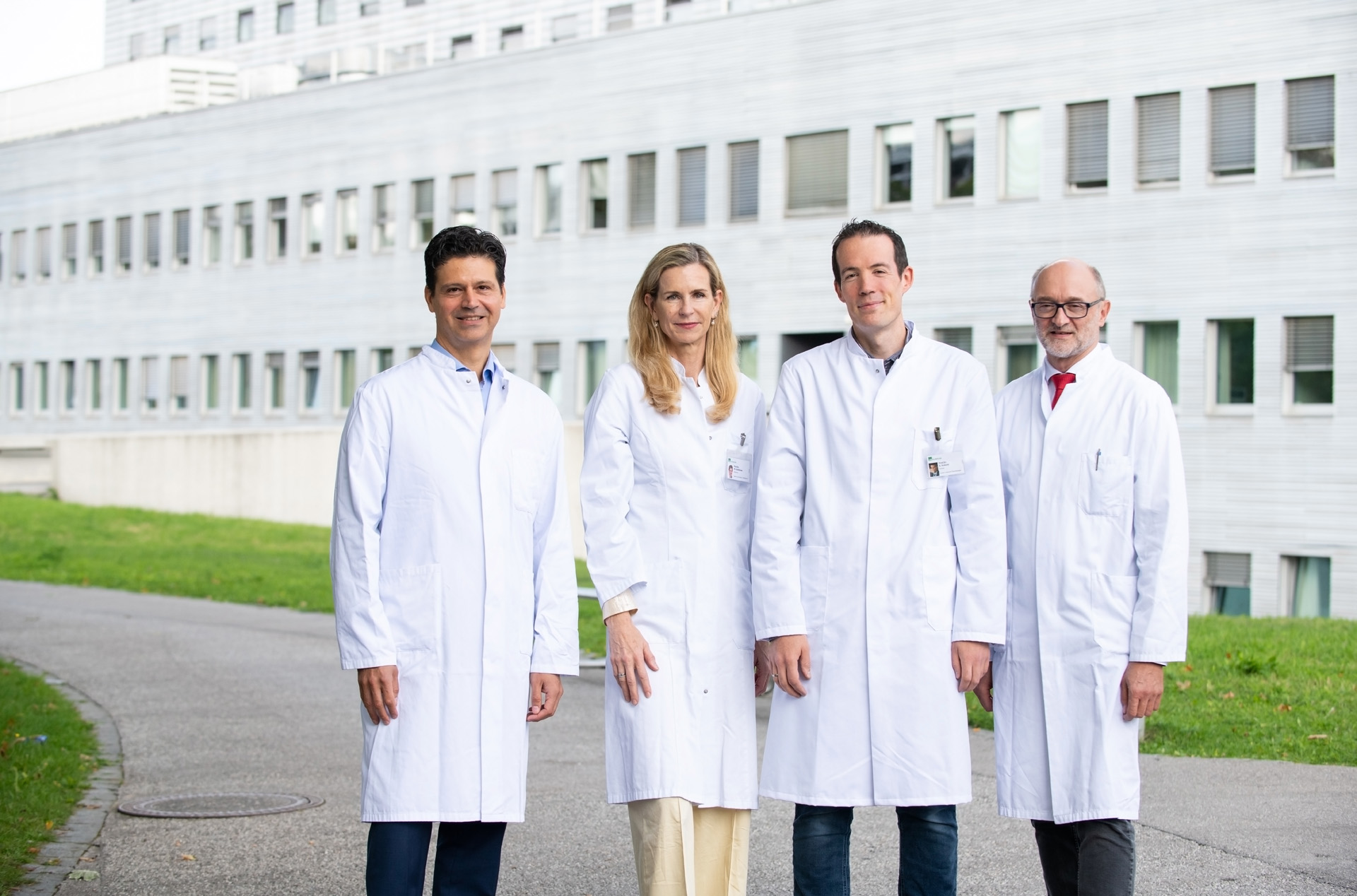
The leadership of the Munich Center for Cell and Gene Therapy (from left to right): Prof. Dr. Stylianos Michalakis, Prof. Dr. Marion Subklewe, Prof. Dr. Sebastian Kobold, and Prof. Dr. Andreas Humpe
“With the MCCG, we are creating a highly interdisciplinary and cross-disease platform for all the work we’ve been doing here for several years in this innovative field of medicine,” says Prof. Dr. Marion Subklewe of the Department of Medicine III at LMU Medical Center. The expert in so-called CAR-T cell therapy is the director of the center.
The vision and aspirations are lofty. “We want to establish the MCCG as a leading center of excellence in Europe for the development of new cell and gene therapies,” says Marion Subklewe. Prof. Dr. Sebastian Kobold, the center’s coordinator, sees “the key benefit of our new network in systematizing and accelerating translation by helping to bridge the gap between laboratory research and clinical trials of new therapies.” Working together, innovative approaches to cell and gene therapy can be brought to the patient’s bedside more quickly and effectively. And there are plenty of them at LMU University Hospital Munich. In Kobold’s lab, for example, promising new approaches have been developed for CAR-T cell therapy in solid tumors such as colorectal or pancreatic cancer.
CAR-T cell therapy has already become indispensable in the treatment of certain forms of blood and lymph node cancer, “and we at LMU University Hospital have been—and continue to be—at the forefront of this field,” says Prof. Dr. Marion Subklewe. For example, LMU experts have conducted extensive research into the safety of this therapy, with findings that have been incorporated into guidelines worldwide. The medical team was also the first in Europe to successfully administer CAR-T cell therapy on an outpatient basis as part of a clinical trial. And they are developing new approaches to make it even more effective than before.
“Now,” Subklewe continues, “CAR-T therapy has expanded beyond cancer medicine and is making inroads into the treatment of autoimmune diseases such as rheumatoid arthritis or multiple sclerosis.” Even the prospects for transplanting organs such as kidneys or lungs may be improved with cell therapy. The Munich researchers are active in this area as well.
Gene Therapies on the Rise
The situation is similar in the field of gene therapies—the MCCG’s second pillar. “The LMU Eye Clinic, for example, was the first institution in Germany to use the first approved gene therapy for the treatment of a hereditary retinopathy,” says Prof. Dr. Stylianos Michalakis, the center’s deputy director. His research group also helped develop the first gene therapy for treating “achromatopsia” and played a key role in bringing it to clinical use. Another example: The center is expected to treat its first patient with a classic blood disorder—sickle cell thalassemia—using a new gene therapy later this year. And the first treatment of a patient with the rare eye disease Stargardt’s disease has already been approved.
“Overall,” says Michalakis, “the coordinated expertise—which exceeds the capabilities of a single laboratory or clinic—will accelerate the development of safe, scalable, and clinically relevant cell and gene therapies for numerous diseases.” Given “that it will be easier to share knowledge about existing infrastructures and make them more accessible to various members of the center.
I am firmly convinced that this will simplify communication and reduce friction,” adds Prof. Dr. Andreas Humpe, the MCCG’s quality management officer. Looking ahead, Marion Subklewe concludes, “we want to use our combined expertise to serve as the first point of contact for industry as well, in order to make decisive advances in medicine in this field.”
Deputy Director of MCCG – Munich Center for Cell and Gene Therapy, Department of Ophthalmology, LMU University Hospital
cbјälguüc vlyzgägolcvimsävfemi
Prof. Sebastian Kobold, M.D.
Coordinator, MCCG – Munich Center for Cell and Gene Therapy; Director, Department of Clinical Pharmacology, LMU University Hospital
cijgcblgu-oüjüämv,imtnful+vfDiuyziu Jmi
Prof. Andreas Humpe, M.D.
QMB MCCG – Munich Center for Cell and Gene Therapy, Division of Transfusion Medicine, Cell Therapeutics and Haemostaseology, LMU University Hospital
gumpigc zfvöivimsful_vfiuyziu mi
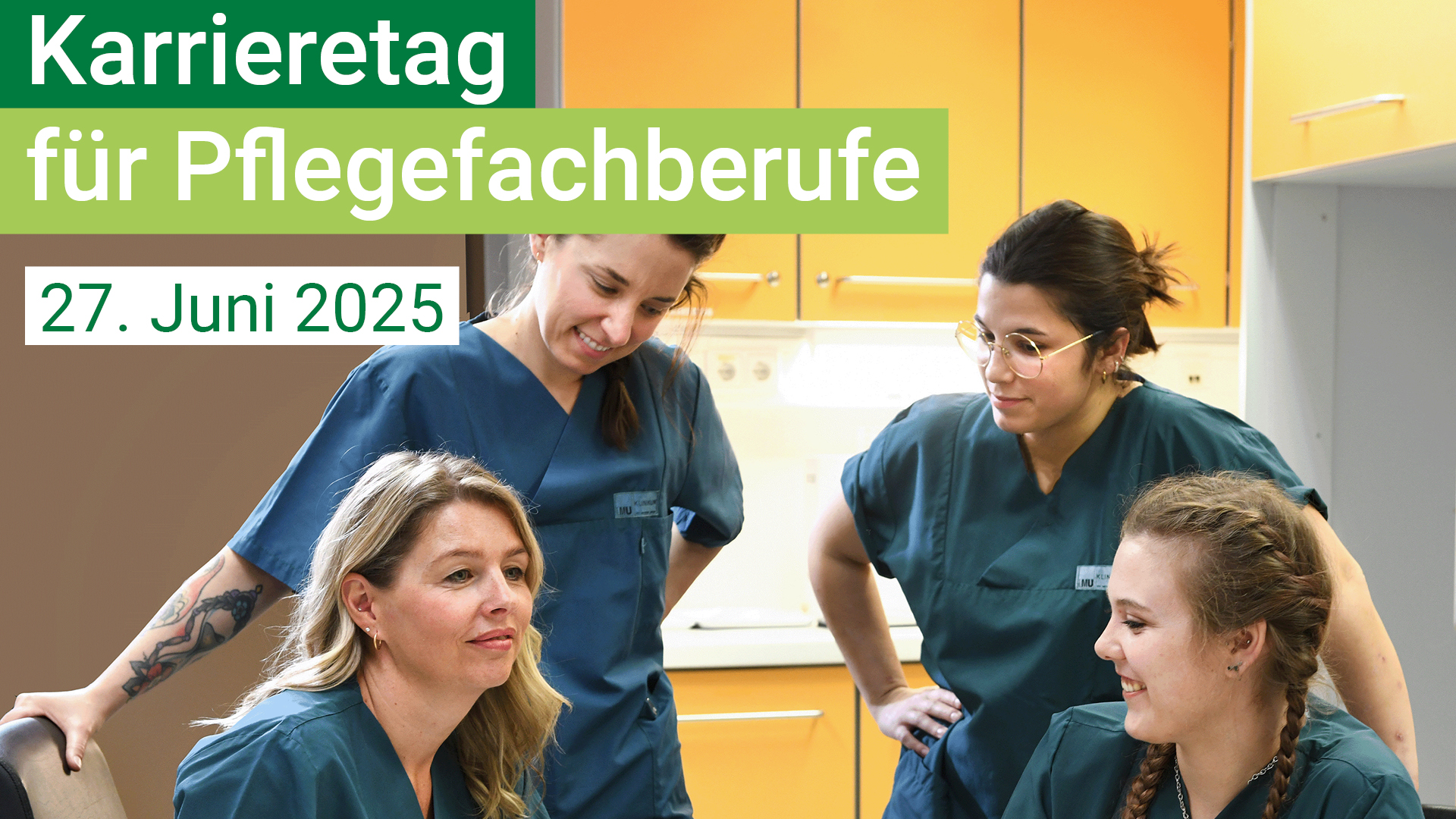
Career Day for Nursing Professions
Care with Heart and Expertise: Join us on June 27, 2025, for the Nursing Career Day at LMU Medical Center —a day filled with inspiring insights into the challenging and holistic world of everyday nursing. Meet experts, discover a wide range of career opportunities, and get exciting information about jobs, training programs, and continuing education. Stop by, talk with colleagues, and be inspired by nursing science in action—with no obligation and no registration required.