Patient Case Study: New Treatment Options for Alzheimer's
ALZHEIMER'S: MAJOR CLINICAL ADVANCEMENT
A brain scan without a tube for diagnosing Alzheimer's disease—this is now available at LMU Medical Center. New treatment options, such as amyloid antibody therapy, are also available there for selected patients in the early stages of the disease.
The patient, Gudrun Sommer (name changed), presented at the memory clinic at LMU Medical Center. Recently, the 79-year-old had been frequently forgetting appointments and, at times, the content of conversations; she couldn’t find things she had put away somewhere, and she could no longer remember her shopping list very well. Above all, she was troubled by the fact that she was having increasing difficulty concentrating on her studies and was easily forgetting concepts she had already learned and understood.
“The patient exhibits a very high baseline level of cognitive function,” says Dr. Sonja Schönecker, Assistant Professor from the Department of Neurology and Polyclinic in Großhadern. It was probably precisely for this reason that Ms. Sommer’s memory deficits seemed so noticeable to her that she initially sought help from a private-practice neurologist, whose examinations raised the suspicion of early-onset Alzheimer’s disease.
Ms. Sommer then sought advice at the memory clinic run by Dr. Schönecker and her team. She wanted to learn more about the new medications approved in Germany that target the so-called amyloid protein deposits in the brain. “We also prescribe these medications,” says Sonja Schönecker, “provided that the diagnostic criteria for early-stage Alzheimer’s disease are met and certain contraindications for the therapy have been ruled out.”
As one of only a few centers in Germany, the Department of Nuclear Medicine is now using a new PET scanner that looks like a barber’s chair with a drying hood—meaning it doesn’t have a narrow tube that can cause claustrophobia. “It’s also ideal for patients who can’t lie still for very long, which is quite common in cases of dementia or movement disorders,” says nuclear medicine specialist Dr. Johannes Gnörich after his initial experience with the device.
The “NeuroLF” is the first device of its kind to receive market approval in both the United States and the European Union. Designed specifically for the diagnosis of brain disorders, its compact design and comparatively low acquisition and operating costs are expected to significantly improve access to PET imaging. “It is suitable for diagnosing brain tumors and epilepsy as well as neurodegenerative diseases such as Parkinson’s or Alzheimer’s,” explains Prof. Matthias Brendel, deputy director of the clinic.
How does a PET/CT scan work?
A detailed medical consultation takes place before the PET/CT scan. During this consultation, the procedure, potential risks, and any questions are discussed.
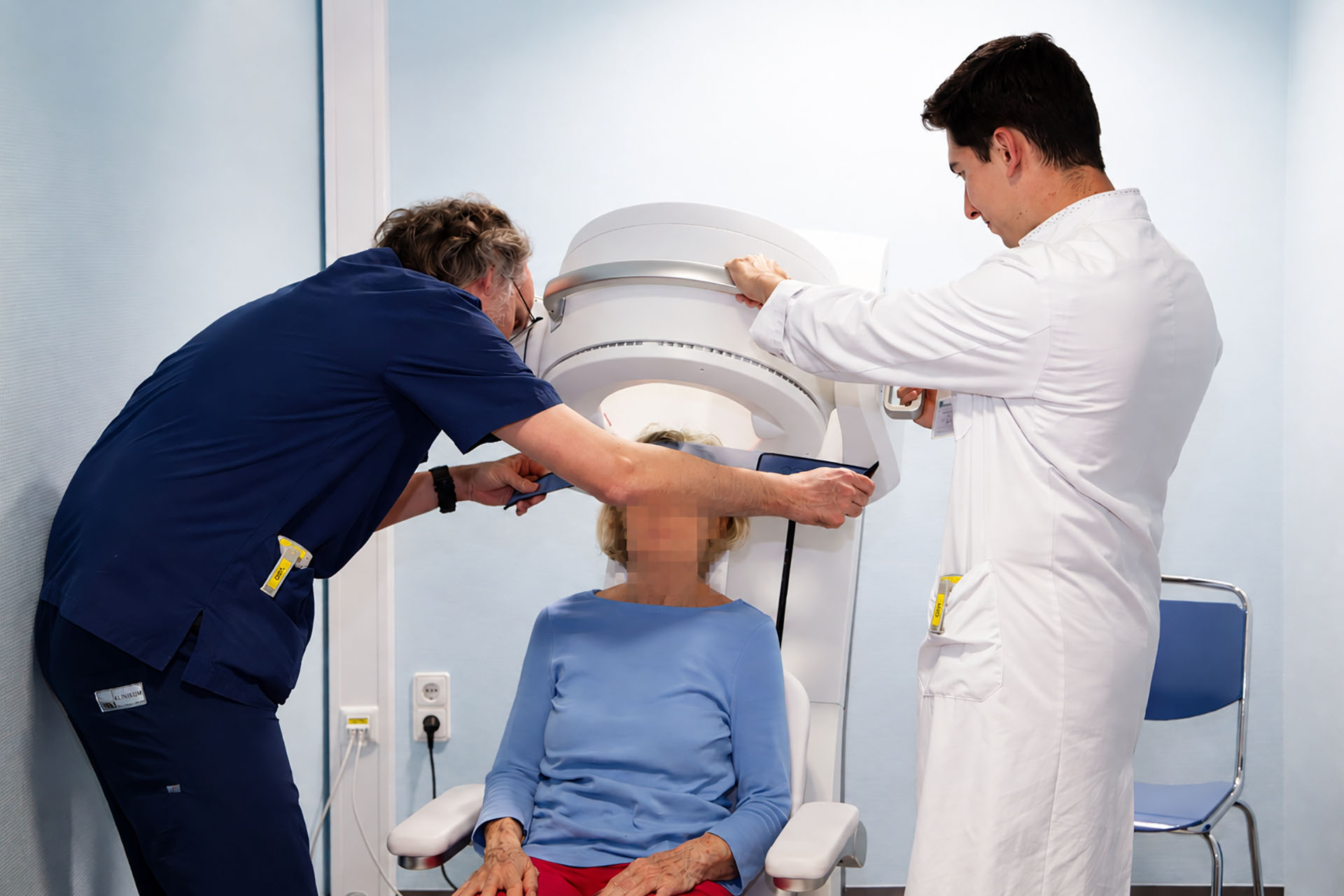
Before the PET/CT scan, the team of medical technologists and physicians carefully prepares everything. All steps are optimally coordinated to ensure a smooth process.
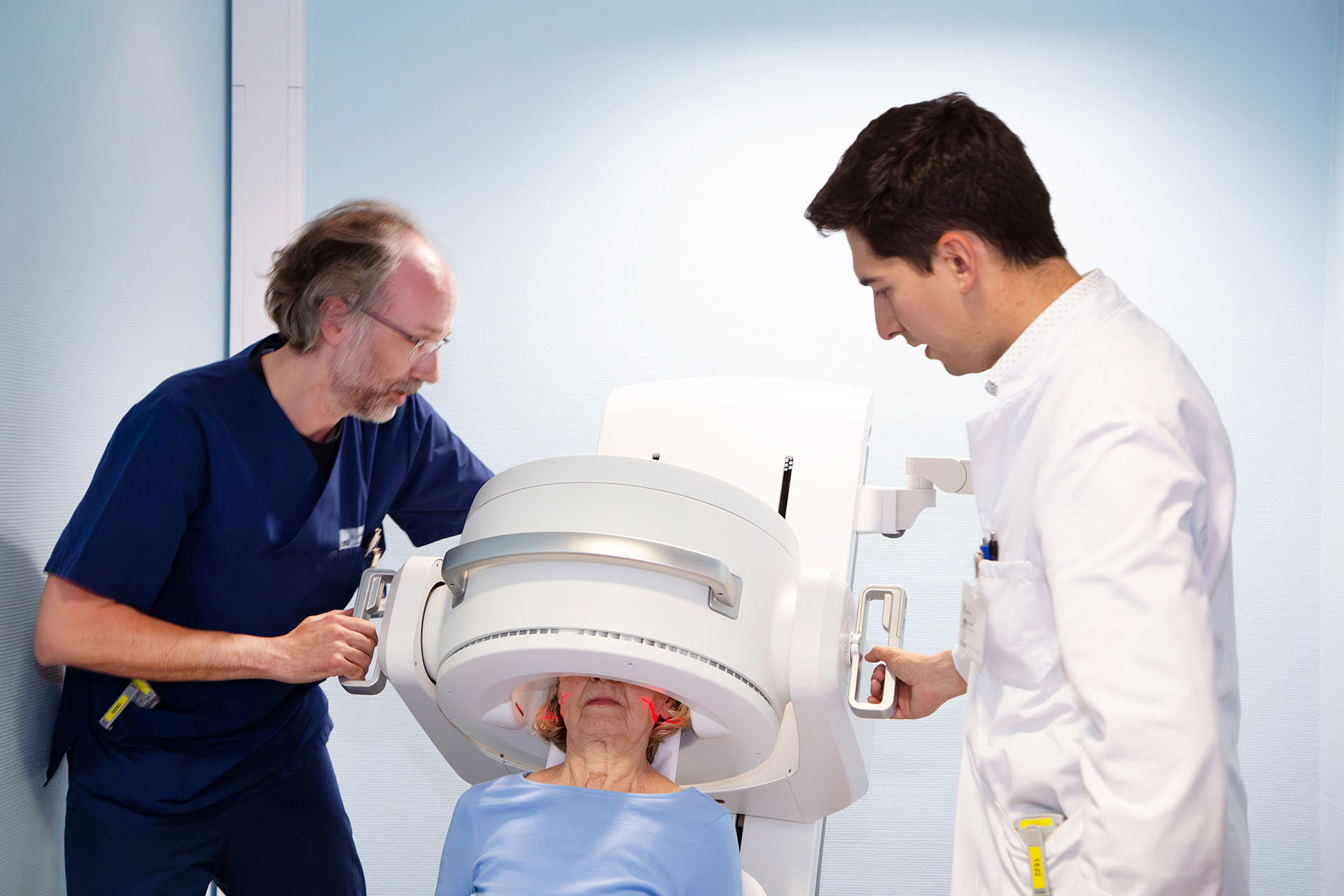
Before the scan, the patient is positioned comfortably. Precise calibration of the equipment by medical technologists and physicians is essential for obtaining meaningful images.
The PET/CT scan takes place in a calm atmosphere, is painless, and provides high-resolution images for an accurate diagnosis.
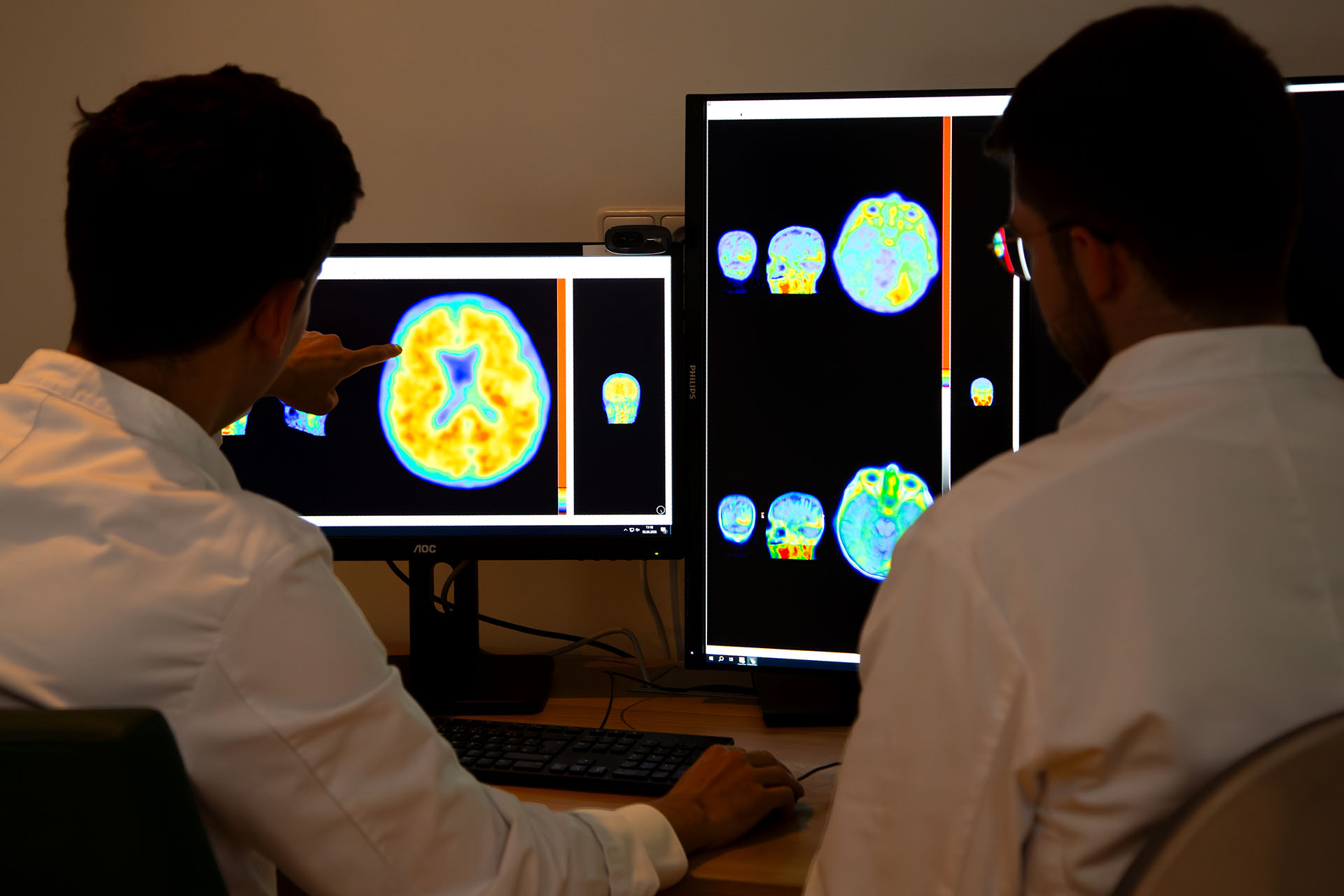
The PET/CT images are jointly evaluated by experienced nuclear medicine specialists. This provides a reliable basis for further diagnosis.
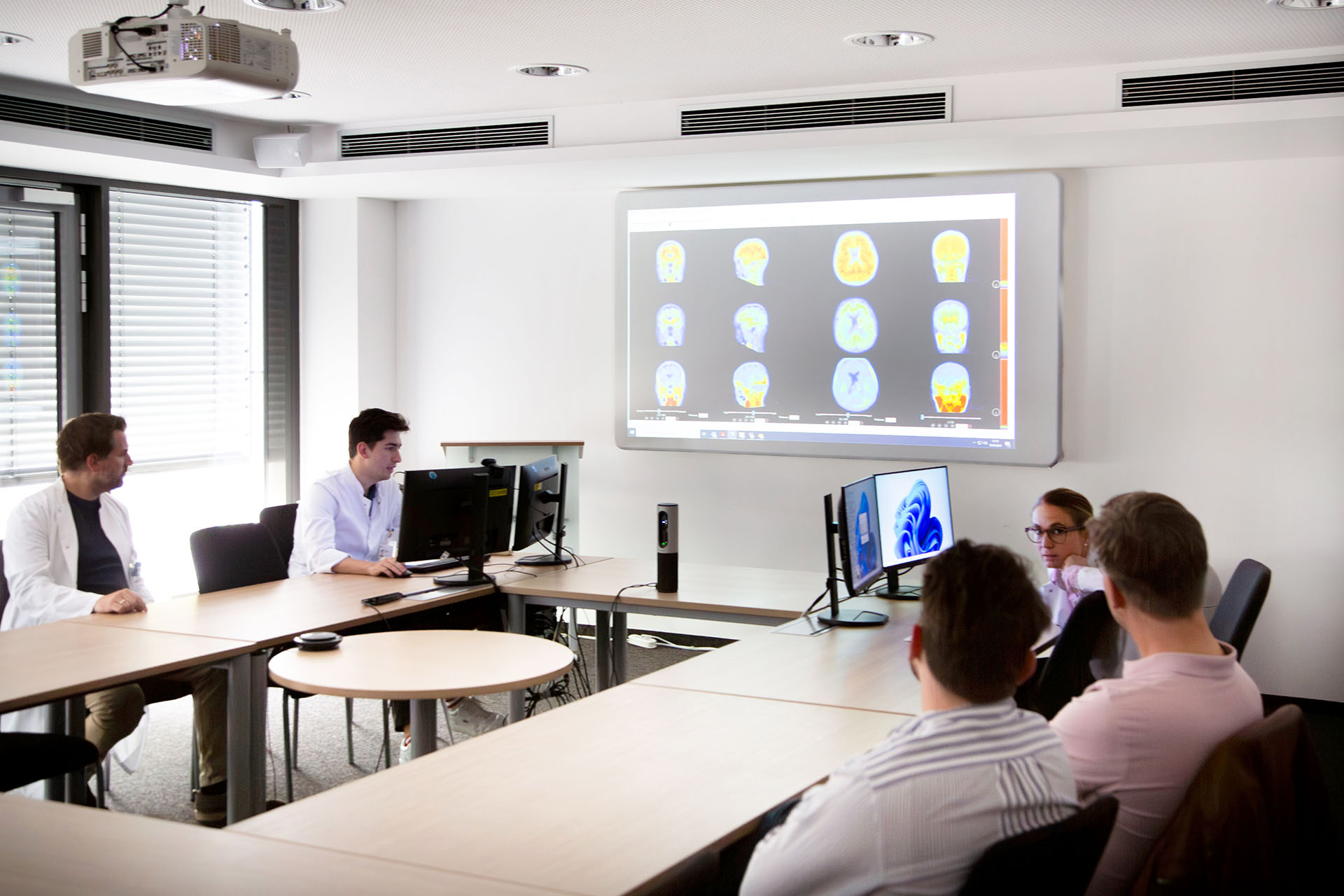
The examination results are discussed together during an interdisciplinary case conference. Close collaboration among various medical disciplines enables the development of a personalized treatment plan.

Patient Gudrun Sommer was also “very impressed” with the device, says Johannes Gnörich—especially since she had been able to compare it to an examination using a conventional scanner. Unfortunately, all of her test results confirmed the suspicion of early-stage Alzheimer’s disease. In other words, her amyloid PET scan was positive. In addition, the nuclear medicine specialists initiated a tau-PET scan to determine the extent to which her brain is already affected by the “tau protein.” Because she does not carry the ApoE4 risk gene, “she met all the criteria for a prescription for a new Alzheimer’s drug,” emphasizes Sonja Schönecker. An MRI also revealed no findings that would preclude prescribing the medication.
This is especially important for patient Gudrun Sommer, “because she is very fit for her age, has managed wonderfully on her own without assistance so far, and should be able to continue doing so for as long as possible.” No wonder, then, “that she was very open to the therapy,” according to the neurologist.
She now receives an infusion of an antibody every four weeks for a maximum of 18 months. However, after just 12 months, a follow-up amyloid PET scan at the Neuro-LF will show whether enough amyloid protein has already been cleared. If this is the case, the therapy would have been successful ahead of schedule and could be discontinued. “This follow-up amyloid PET scan can help reduce the duration of treatment and lower treatment costs for patients and the healthcare system,” says Prof. Rudolf Werner, Director of the Department of Nuclear Medicine.
“The latest developments in the diagnosis and treatment of Alzheimer’s disease represent significant progress and open up new possibilities for the care of patients with Alzheimer’s disease,” emphasizes Sonja Schönecker. “The task now is to further develop these approaches and expand their application in a meaningful way.”
FAQ – The Most Important Questions and Answers About Amyloid Antibody Therapy
Amyloid antibodies are modern medications used to treat early-stage Alzheimer’s disease. This class of drugs includes, among others, lecanemab and donanemab.
The antibodies specifically target pathologically altered forms of the amyloid-beta protein in the brain. These protein deposits are considered a key component of the disease processes in Alzheimer’s disease. By binding to amyloid-beta, the deposits can be more easily recognized and broken down by the immune system.
Amyloid antibodies cannot cure Alzheimer’s disease. However, in carefully selected patients in the early stages of the disease, they can slow the progression of the disease (by approximately one-third) and thereby delay cognitive decline.
The treatment is intended for patients with mild cognitive impairment (MCI) or mild dementia associated with Alzheimer's disease.
A prerequisite is that Alzheimer’s disease has been definitively diagnosed and that the patient is still in the early stages of the disease.
This therapy is not suitable for people with moderate or severe Alzheimer’s dementia, nor for patients with other forms of dementia, such as Lewy body dementia, vascular dementia, or frontotemporal dementia.
A prerequisite for treatment is a comprehensive diagnostic evaluation, including neuropsychological testing as well as imaging and genetic testing. Treatment is only possible if early-stage Alzheimer’s disease with amyloid pathology has been confirmed and there are no relevant contraindications.
Exclusion criteria include, in particular:
- current anticoagulation therapy (strong pharmacological inhibition of blood clotting)
- Evidence of cerebral amyloid angiopathy (CAA) (a disease of the blood vessels in the brain in which amyloid deposits form in the vessel walls)
- ApoE4 homozygosity (two copies of the APOE4 gene in the genome)
Treatment is administered as an intravenous infusion at regular intervals. Depending on the medication, the infusion is given every two or four weeks.
The therapy is part of a structured treatment plan. This includes:
- detailed information about the benefits, limitations, and risks
- regular clinical follow-up appointments
- Follow-up MRI scans to monitor for potential side effects
- close interdisciplinary collaboration between neurology, psychiatry, neuroradiology/radiology, and nuclear medicine
- Reassessment of treatment success over time
Over the course of treatment, the success of the therapy in terms of amyloid reduction in the brain can be assessed using amyloid PET. This can be used to evaluate progress and to support decisions regarding the further treatment strategy.
Amyloid antibodies can cause side effects. Of particular importance are so-called “amyloid-related imaging abnormalities,” or ARIA for short. These are changes in the brain, such as swelling and/or bleeding. They can be detected on an MRI. ARIA usually occur without symptoms (are asymptomatic), but they can also cause symptoms such as headaches, confusion, dizziness, visual disturbances, nausea, or neurological deficits. Therefore, regular MRI follow-ups are necessary during treatment.
The LMU Medical Center offers the newly approved anti-amyloid therapies with lecanemab (Leqembi®) and donanemab (Kisunla®).
A request for this therapy can only be made by a primary care physician or a neurologist. The final decision regarding the patient’s suitability for the therapy rests with the treating physician at our center. The Memory Clinic website also provides a checklist for referring physicians.
Patients can register at:
Department of Neurology
Memory Clinic/Cognitive Neurology
Tel.: 089/4400 74807
https://www.lmu-klinikum.de/neurologie/fur-patienten/ambulanzen/kognitive neurologie/9f467346734094ff
Institute for Stroke and Dementia Research (ISD)
Memory Clinic
Email: Ambulanz.ISD@med.uni-muenchen.de
Phone: 089-4400-46046
https://www.lmu-klinikum.de/isd/fur-patienten/gedachtnisambulanz
Department of Psychiatry and Psychotherapy
Alzheimer’s Therapy and Research Center
Tel.: 089 4400 55863
Email: PSY.Alzheimerzentrum@med.uni-muenchen.de
https://gedaechtniszentrum-innenstadt.de/alzheimer/kontakt.html
Our Experts
Prof. Dr. med. Matthias Brendel
Deputy Director of the Department of Nuclear Medicine
Johannes Gnörich, M.D.
Senior Physician in Charge of a Department of Nuclear Medicine at the Clinic
Points of Contact at LMU Medical Center
Memory Clinic/Cognitive Neurology at the Department of Neurology
Phone: +49 89 4400-74807
Institute for Stroke and Dementia Research
Phone: +49 89 4400-46046
Alzheimer's Therapy and Research Center at the Department of Psychiatry and Psychotherapy
Phone: +49 89 4400-55863