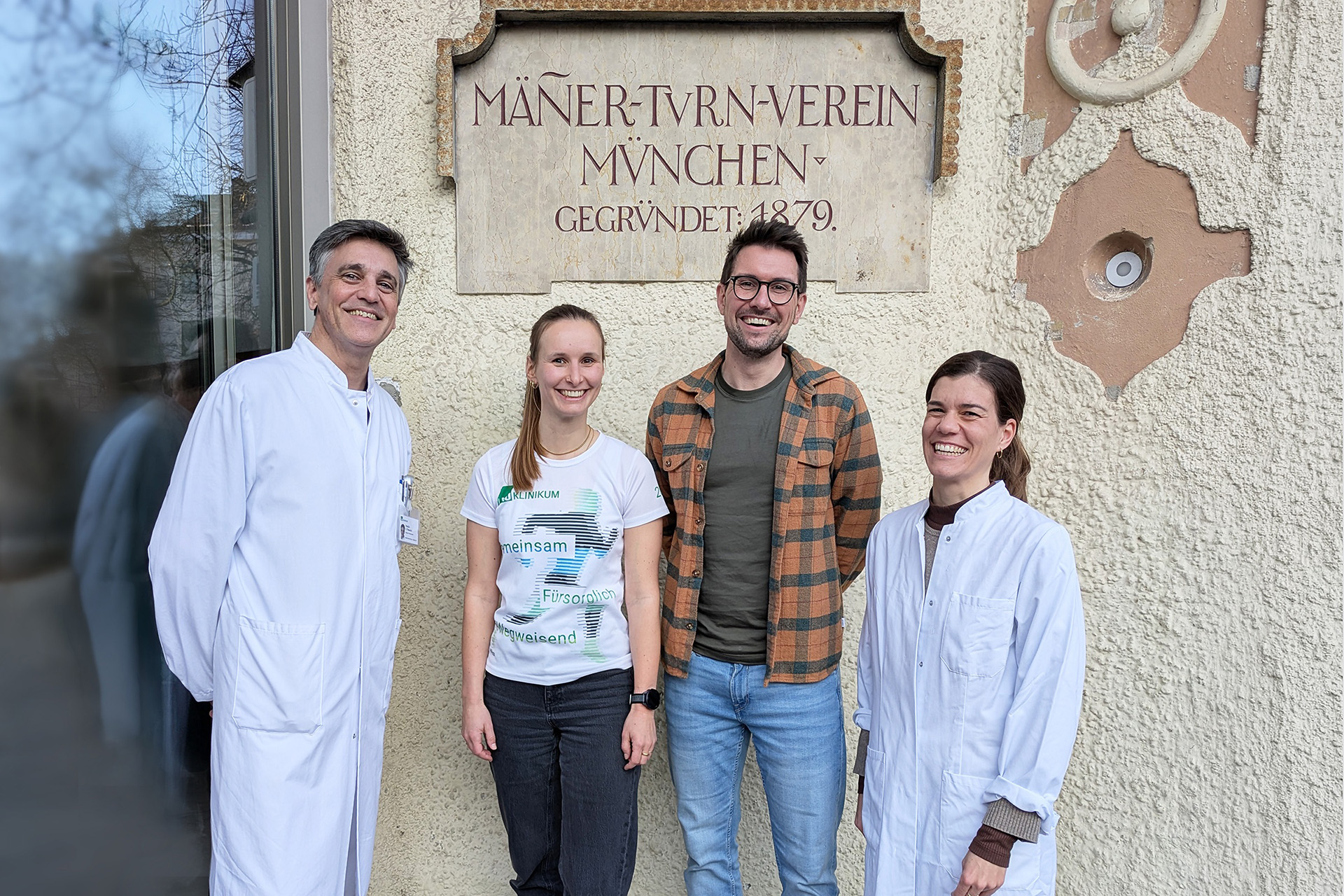
LMU University Hospital Munich and MTV Munich 1879 launch joint exercise therapy for cancer patients
Every year, around 500,000 people in Germany are diagnosed with cancer. Cancer therapy is often accompanied by side effects such as fatigue, nerve damage or sleep disorders. Studies show that structured training can alleviate these side effects and physical activity can improve the prognosis. This is where the Effektiv study comes in: "The aim is to clarify how weekly group training affects physical performance, quality of life and nutritional status," says Prof. Sebastian Theurich, senior physician at the Department of Medicine III and head of the Effektiv study.
Weekly training at MTV
The first study course started at the end of 2025: Once a week, cancer patients from Medical Clinic III train at the MTV Munich 1879 sports center in Häberlstraße. With over 8,000 members, this is one of the largest popular sports clubs in Bavaria. Qualified trainers lead the program. The content is based on the so-called Oncological Training and Exercise Therapy (OTT). The training program combines strength and endurance training with coordination and relaxation exercises.
LMU University Hospital team provides scientific support for training
Prof. Sebastian Theurich, assistant physician Dr. Anouk Erb and oncological training therapist Christine Linner scientifically monitor the training over a period of twelve months. At the beginning, the participants undergo a comprehensive initial sports medical examination.
The study team collects various laboratory values and data at three further points in time, including on performance, quality of life and nutrition. A special needs analysis (RoBa score) helps to make individual progress visible. This means that the training program can always be adapted to the patient's state of health.
Further offers for cancer patients planned
"We often talk about how sport brings people together," says Sebastian Gallus, club manager of MTV Munich 1879. "But this cooperation with the LMU University Hospital Munich has shown us once again what that can really mean: Every Tuesday, people who are currently battling cancer train with us. Not alone, but in a group. Not somehow, but scientifically supported by the Effektiv study by Prof. Theurich. For us, this is popular sport in its strongest form."
Stadtsparkasse München, the Aurel Steinert Foundation and FC Bayern Hilfe e.V. are supporting the project financially. In the future, the two partners would like to develop further projects to improve and expand the range of exercise options for cancer patients. The Interdisciplinary Center for Sports Medicine at LMU University Hospital Munich and MTV Munich 1879 have been working together since the beginning of 2025 to promote cardiovascular health and athletic performance.
FAQ: Exercise therapy for cancer
What is oncology training and exercise therapy (OTT)?
Oncological training and exercise therapy (OTT) is a structured training concept for people with cancer. It is based on current guidelines, combines sports science findings with clinical experience and systematically integrates exercise into the oncological treatment concept. The aim is to actively reduce the consequences of illness and therapy.
The concept combines
- strength training
- endurance training
- Coordination and balance
- Flexibility and relaxation
How does structured exercise therapy help with cancer?
Quality-assured exercise therapy [1] improves cardiovascular fitness, strengthens the muscles and has a positive effect on metabolic processes and body composition. It also has a positive effect on immunological and hormonal parameters. [2] This improves the tolerability of the therapy and reduces the risk of complications. Physical side effects, especially during intensive treatments, are also significantly reduced. Above all, however, regular exercise makes a decisive contribution to quality of life.
What side effects of cancer therapy can structured exercise therapy help with?
A common accompanying symptom of cancer and cancer treatment is fatigue, a persistent loss of energy and muscle strength. Exercise therapy can specifically counteract this through a combination of strength and endurance training. [3] Classic therapy-associated side effects, such as polyneuropathy (nerve damage), cardiotoxicity (cardiac stress), pain, nausea and sleep disorders can also be reduced. [1] Physical activity also has a positive effect on depression and anxiety. [4] More and more scientific studies are showing that not only can side effects of the disease and therapy be positively influenced, but that there is also a positive correlation between regular physical activity and a lower mortality rate as well as a reduced risk of relapse. [5,6, 7,8]
What needs to be considered when using exercise therapy for cancer?
Exercise must be individually planned and regularly adapted. The type and stage of the disease, concomitant illnesses, current therapy phases and personal previous experience in sport all play a decisive role. There can therefore hardly be a generally valid training recommendation. Instead, the focus is on an individually tailored concept that takes into account endurance and strength as well as coordination, balance, flexibility and relaxation.
What is the Effektiv study investigating?
The Effective study analyzes the effects of weekly, structured group training on the physical performance, quality of life and nutritional status of cancer patients over a period of twelve months.
In particular, the study examines
- Feasibility and participation: how well can regular training be integrated into patients' everyday lives?
- Performance: Does the training improve endurance and strength?
- Quality of life: What effects does exercise have on general well-being?
- Nutritional status: Does body composition and nutritional status improve?
[1] Campbell KL, Winters-Stone KM, Wiskemann J et al. Exercise Guidelines for Cancer Survivors: Consensus Statement from International Multidisciplinary Roundtable. Med Sci Sports Exerc 2019; 51: 2375-2390
[2] Hojman P, Gehl J, Christensen JF et al. Molecular Mechanisms Linking Exercise to Cancer Prevention and Treatment. Cell Metab 2018; 27: 10-21. doi:10.1016/j.cmet.2017.09.015
[3] Belloni S, Arrigoni C, Caruso R. Effects from physical exercise on reduced cancer-related fatigue: a systematic review of systematic reviews and meta-analysis. Acta Oncol 2021; 60:1678-1687. doi:10.1080/0284186X.2021.1962543
[4] Singh B, Spence R, Steele ML et al. Exercise for Individuals With Lung Cancer: A Systematic Review and Meta-Analysis of Adverse Events, Feasibility, and Effectiveness. Semin Oncol Nurs 2020; 36: 151076
[5] Scott JM, Nilsen TS, Gupta D et al. Exercise Therapy and Cardiovascular Toxicity in Cancer. Circulation 2018; 137: 1176-1191. doi:10.1161/CIRCULATIONAHA.117.024671
[6] Zimmer P, Baumann FT, Oberste M et al. Effects of Exercise Interventions and Physical Activity Behavior on Cancer Related Cognitive Impairments: A Systematic Review. Biomed Res Int 2016; 2016: 1820954. doi:10.1155/2016/1820954
[7] Cormie P, Zopf EM, Zhang X et al. The Impact of Exercise on Cancer Mortality, Recurrence, and Treatment-Related Adverse Effects. Epidemiol Rev 2017; 39: 71-92. doi:10.1093/epirev/mxx007
[8] Courneya, Kerry S et al. "Structured Exercise after Adjuvant Chemotherapy for Colon Cancer." The New England journal of medicine vol. 393,1 (2025): 13-25. doi:10.1056/NEJMoa2502760
Authors
Prof. Dr. med. Sebastian Theurich
- Deputy Clinic Director, Head of the City Center Campus; Senior Physician at the Department of Medicine III
- Specialist in internal medicine, haematology and oncology, additional qualification in nutritional medicine (DAEM/DGEM)
- Head of the Physical Activity in Oncology Working Group
- Head of the Cancer and Immunometabolism Working Group
Dr. med. Anouk Erb
- Assistant doctor at the Department of Medicine III
- Member of the Physical Activity in Oncology Working Group